

What Actually Defines Best Quality Aloo Mash
Share
Beyond the Marketing Label
Every packaged food brand wants to claim it makes the best quality aloo mash, but the phrase means little without looking at what actually goes into the product and how it is made. Buyers who take a moment to check ingredients, sourcing, and certifications end up with a far better sense of what they are really getting. Shree Aahar
It Starts With the Potatoes
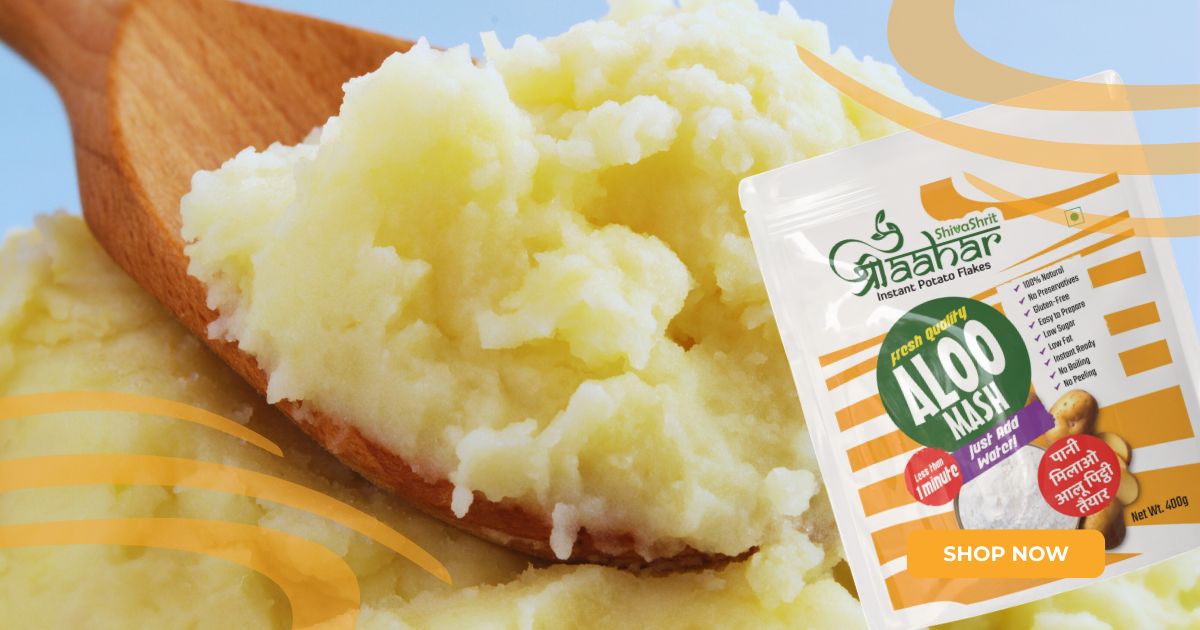
Quality begins with the raw potatoes used in production. A short, potato-forward ingredient list is usually a strong signal. Shree Aahar’s aloo mash, made by Shivashrit Foods Limited in Aligarh, is built from potatoes at 98.6 percent with a small emulsifier addition (INS471) at 0.4 percent, keeping the recipe close to the vegetable rather than diluted with fillers.
Manufacturing Standards Matter
Best quality aloo mash also depends on how it is produced. Manufacturing under ISO and HALAL certified conditions signals a level of process control that goes beyond a single factory’s own claims, giving buyers an external reference point for quality and food safety practices.
Texture and Rehydration
A genuinely high-quality mash should rehydrate smoothly and evenly when hot water is added, without leaving lumps or a gluey texture. This consistency is often the clearest, most immediate sign of quality that a consumer notices the moment they prepare it. Shree Aahar
No Shortcuts on Additives
Some lower-quality products lean on preservatives or artificial flavoring to mask an inferior potato base. A best quality aloo mash should not need those shortcuts. Shree Aahar’s product is preservative-free and gluten-free, relying on the potato itself rather than additives to carry the taste.
Scale Without Sacrificing Standards
Producing at scale while holding onto quality is not easy, which is why production capacity is worth noting. Shivashrit Foods Limited operates a facility capable of 28.8 metric tons of potato flakes per day, built to maintain consistent standards across large volumes.